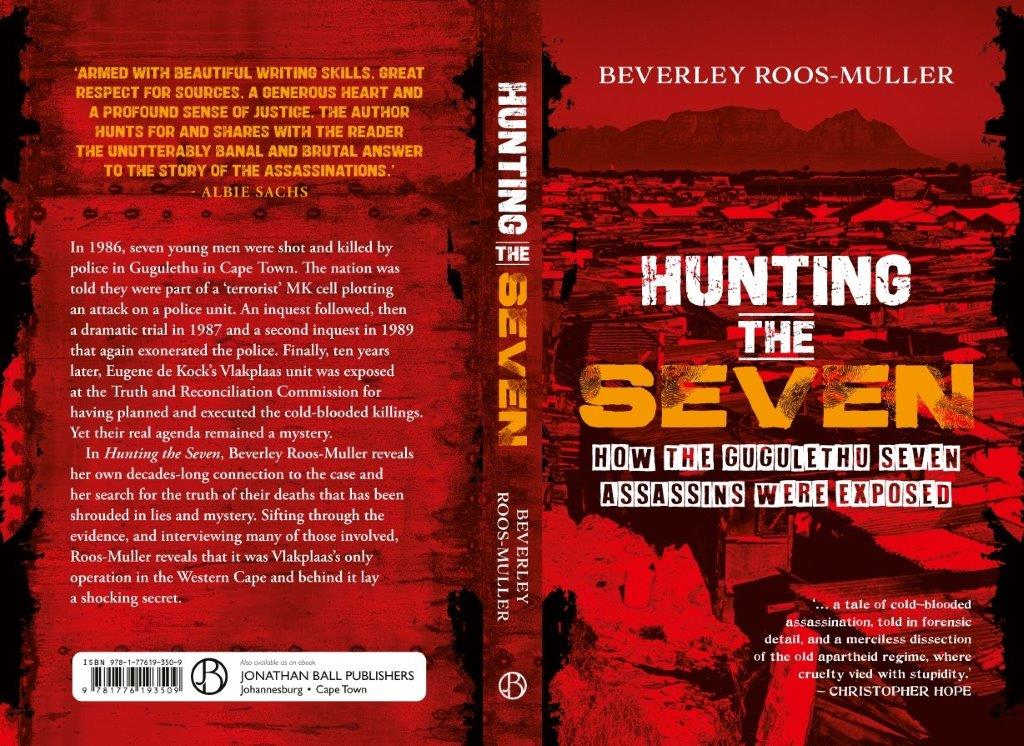
As Crime Reporter for the Cape Times, I arrived at the Thomas Boydell building, headquarters of the SA Police in the Western Cape, shortly after 9am on March 3, 1986, for the routine daily crime briefing given by their public relations division. However their offices were bereft of people and I immediately suspected I was missing out on something big. As I was about to ask around, the telephone on police PR, Lt Attie Laubscher’s office desk rang and I picked it up. It was Charl Pauw, a television reporter for the SA Broadcasting Corporation, asking if I’d heard about a shoot-out near NY1 in Guguletu.
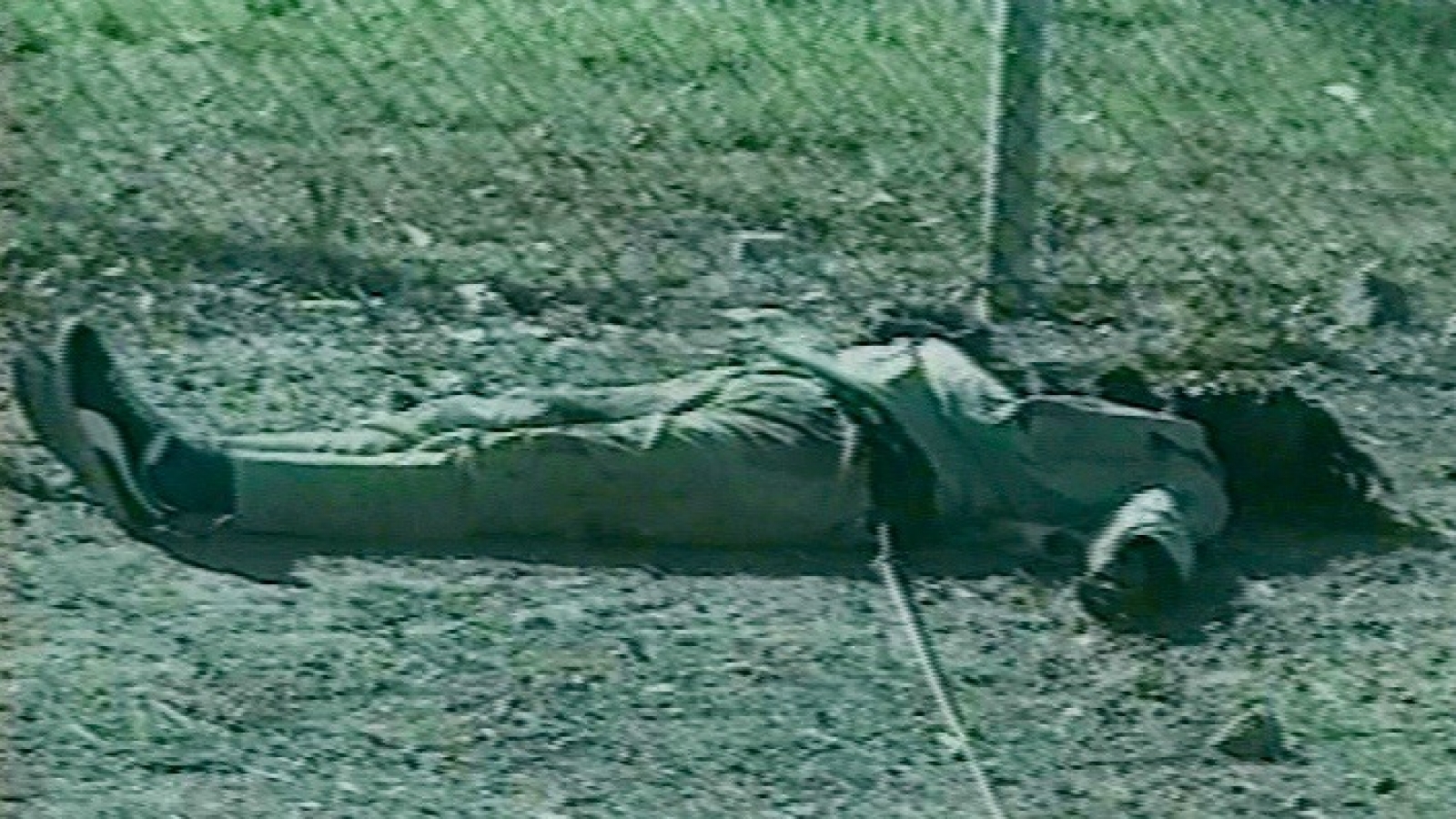
I ordered a car from our office pool and myself and a photographer rushed out to the familiar township, arriving outside the three-story Dairybelle Workers’ Hostel to find a large and restive crowd gathered around a cordoned off area in which several police vehicles were parked. I could see police cleaning up pools of blood or at least throwing dirt over it near a large roadside gumtree, besides which an army Casspir troop-carrier was parked. Speaking Zulu/Xhosa, I asked people in the angry crowd what had happened. While nobody had any detail or eyewitness accounts, the consensus seemed to be that police had shot and killed some young township residents. I saw Lt Attie Laubscher on the outskirts of the cordon and immediately pressed him for answers. His guarded reply was revealing; ‘Chris, I can’t tell you anything, you’ll have to phone Pretoria for this one, it’s political’. I decided the best eyewitness vantage point would have been the upper stories of the Dairybelle Hostel. I managed to slip through the closed hostel gates and scoured the mostly empty upper dormitories. Eventually on the second floor I found an eyewitness who told me there had been a grenade thrown from a vehicle in the street below, followed by a fierce exchange of fire. One combatant had collapsed near a large gum tree and police had walked up to him and ‘finished him off,’ shooting him in the head, while another emerged from bushes in a nearby field, with his hands above his head. A policeman approached him, kneed him in the stomach and turned to another policeman before turning back and firing a shotgun at virtual point blank range at his head. He gave me his name and said he was a cleaner in the hostel block. I then encountered a resident downstairs who repeated the story and took me to his eyewitness vantage point on the third floor. His detail was strikingly similar to the first witness. I seem to remember him showing me a bullet hole in one window and him saying that at the height of the gun-fight he spent some time ducked below the window sill. A third witness gave a very similar version of events. I specifically mentioned to all of them the seriousness of their allegations, but they were emphatic and I remember thinking it was too much of a coincidence, them being at different places, hardly knowing one another, and their stories being so similar.
I can’t remember how, but I was told that the Murder and Robbery Squad were somehow involved and I later went to their Bishop Lavis headquarters where I was regaled by some of the actual police combatants about their fierce gun-battle with ‘terrorists’ and shown an array of ‘guerilla weaponry’ spread on a table top. (A few grenades, an AK47 and a Tokarov pistol, if memory serves). They said they received ‘intelligence’ that a police van carrying change-over shift staff to the Guguletu police station would be attacked early that morning and had set a counter-ambush. I deliberately avoided confronting them with my eyewitness version as it would have immediately compromised my informants, but we later officially put it to police who predictably asked for the names. After my Editor, Tony Heard, had closely quizzed me, the Cape Times the next morning carried my eyewitness version as a top-of-front-page strap, with pictures of the police ‘heroes’ and their ‘weapons haul’ below as the lead story (which I had based on the police combatants version). The police made no mention of any close range shootings, but much of a policeman whose R4 rifle butt and cheek were nicked by an AK47 bullet as he sat in his vehicle. The ensuing days became a game of cat and mouse between us and the police in securing affidavits from my eye-witnesses – which we eventually won after days of my staking out the hostel to see when one in particular would appear. His co-workers said he’d gone to the (then) Transkei homeland, suffering from a tooth infection, which left me skeptical. Eventually he did return, sure enough with jaw strapped tightly with a cloth and complaining of an infected tooth. We got him and his fellow eyewitnesses to sign affidavits with the help of Cape Town advocate and parliamentarian, Tiaan Van der Merwe. Apparently the absent one had escaped the clutches of the police. Not so one colleague who was pulled in, interrogated and asked why he ‘told lies to the Cape Times,’ the interrogation room door closed ominously behind him. A few days later, a Major Mostert entered our newsroom, marched up to my desk and tossed an affidavit in front of me, asking me to ‘just sign it’ to avoid being ‘Section 205’d’ (a Criminal Procedure Act law requiring people with information pertinent to a criminal case to reveal their sources or face an indeterminate period in jail). I refused, saying we had our own lawyers advising us.
What followed was an aggressive and ugly police and government propaganda campaign pillorying the Cape Times, myself (I was banned from the police crime conference and a police news blackout imposed on the Cape Times), my colleague Tony Weaver, a hardened reporter of the Namibian freedom struggle (who reported my story on the BBC’s Africa Service and also did several follow up probes on the family of the murdered seven), and our progressive Editor, Tony Heard. We were labelled, a ‘Communist rag’ in by national police minister, Louis le Grange, with our cutting-edge daily reports of the civil war being waged in the townships waved about in parliament as evidence of our ongoing anti-government, pro-ANC campaigning. Apparently with our reportage of the Gugulethu Seven we’d gone ‘a bridge too far,’ and they were determined to exact punishment, serving Weaver and I with Section 205 subpoena’s and charging Weaver, a ‘known activist reporter’ under Section 27B of the Police Act (‘Publication of untrue matter about police without having reasonable grounds for believing it to be true ‘– a piece of legislation that put the burden of proof on the accused). We both got off, myself because the diligent lawyer Tiaan van der Merwe had secured watertight affidavits from my witnesses who felt confident of proper legal protection and were thus willing to be identified, and Weaver after a lengthy court case in which a top-level duo of forensic pathologist, David Klatzow and renowned Advocate Jeremy Gauntlet, virtually put the police on trial, the magistrate finding our version the more likely. It was but a foretaste of what the Truth and Reconciliation Commission was to reveal more than a decade later, this time putting the entire Western Cape police leadership and the Security Police’s covert operatives from the infamous Vlakplaas headquarters, in the deeply uncomfortable, inescapable glare of public indemnity hearings. A far more sinister tale was to unfold…